I’ve always liked cycling, but after I had a stroke in my twenties it became difficult. Starting and stopping was a problem, and I had a tendency to fall whenever I turned right - my weaker side. Two wheels just didn’t feel safe anymore.
After some research I ended up on recumbent trikes. Three wheels, low centre of gravity, no balance required. I went through a few of them over the years.
The first was a basic KMX I bought second hand from eBay - I can’t remember much about it other than one trip to the Netherlands with it in the back of the car, but it proved the concept worked.
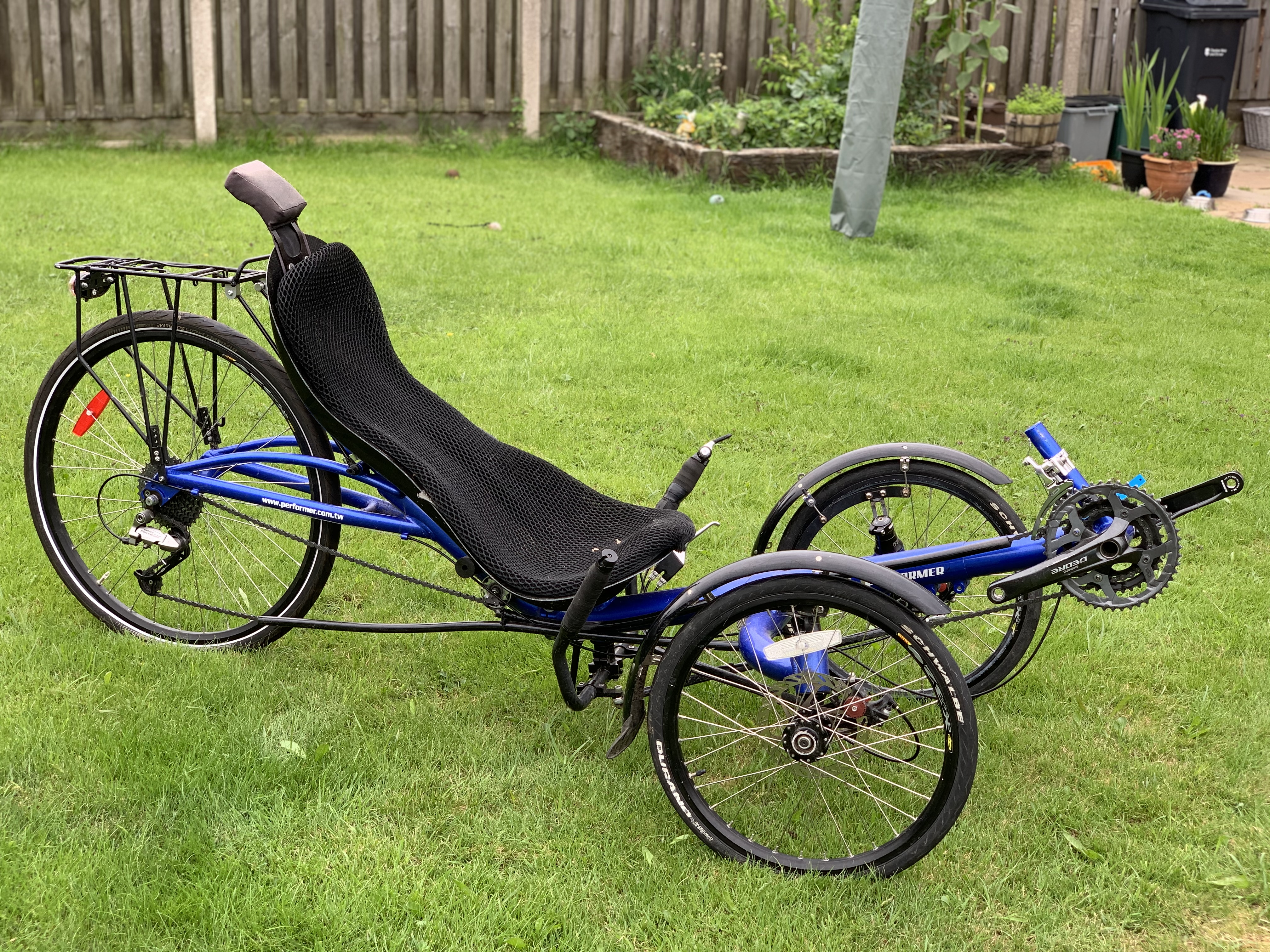
Next was a Performer trike that I bought new. I’m in the UK, it was made in Malaysia, and I ordered it from someone in Australia.
Finally I got myself a used Ice trike - maybe not the Rolls Royce of recumbent trikes, but highly regarded and a genuinely nice thing to ride.
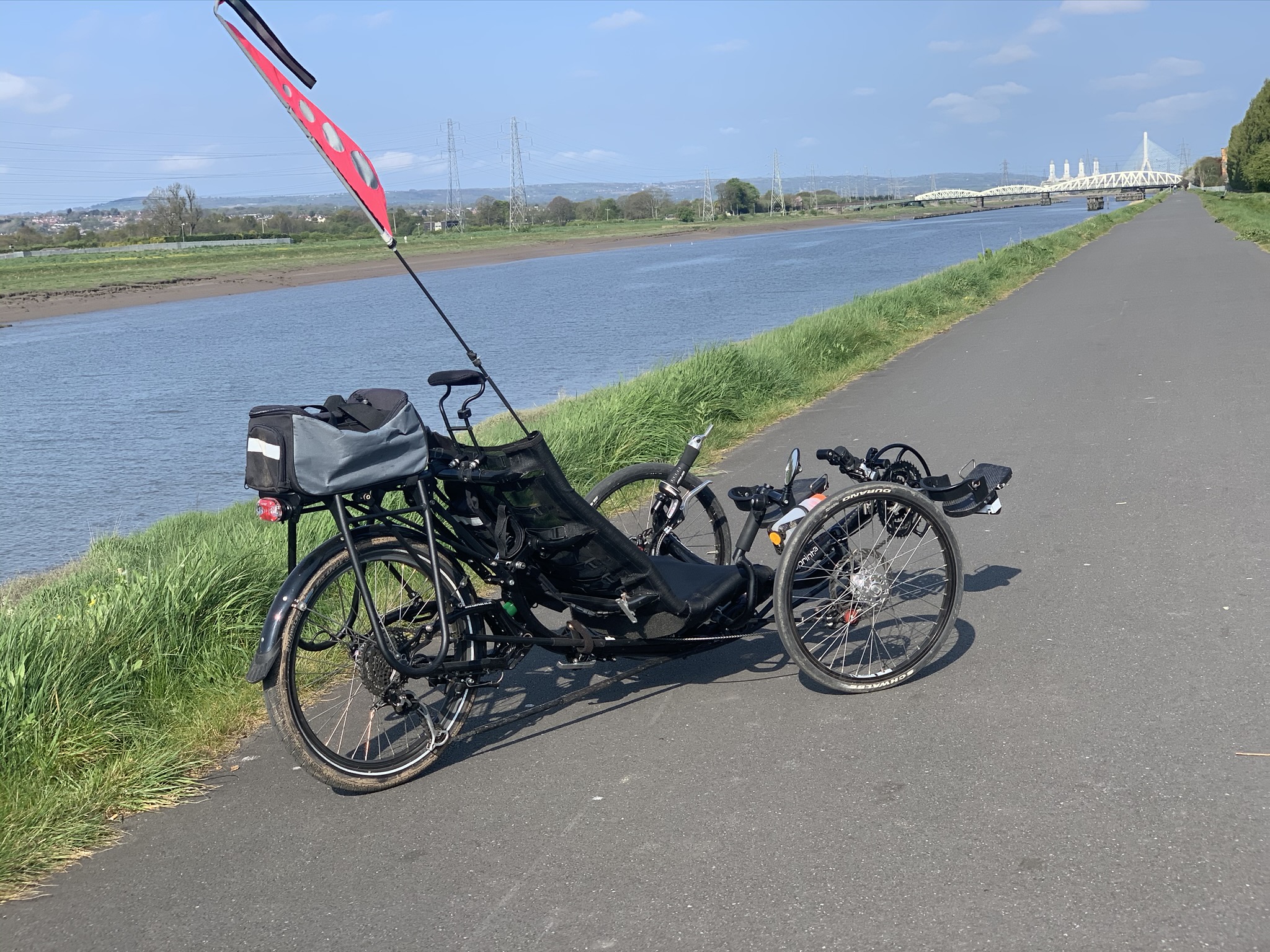
The trikes served me well for nearly twenty years. But life changes.
Why go back to two wheels?
When it was just the two of us, or when the girls were small, putting a folded trike in the boot was doable. Now they’re getting older we need more space in the car when we go on holiday. A mountain bike can go on the bike rack on the back of the car with the others - the trikes were always too awkward for that.
It was time to see if I could make two wheels work again.
Finding the right bike
There’s a guy called Daz who runs Upcycle Bikes from a unit on a farm near where I live. All refurbished second-hand bikes, but he’s got a big selection. I spent a couple of hours in his car park trying different ones until I found something I was comfortable with.
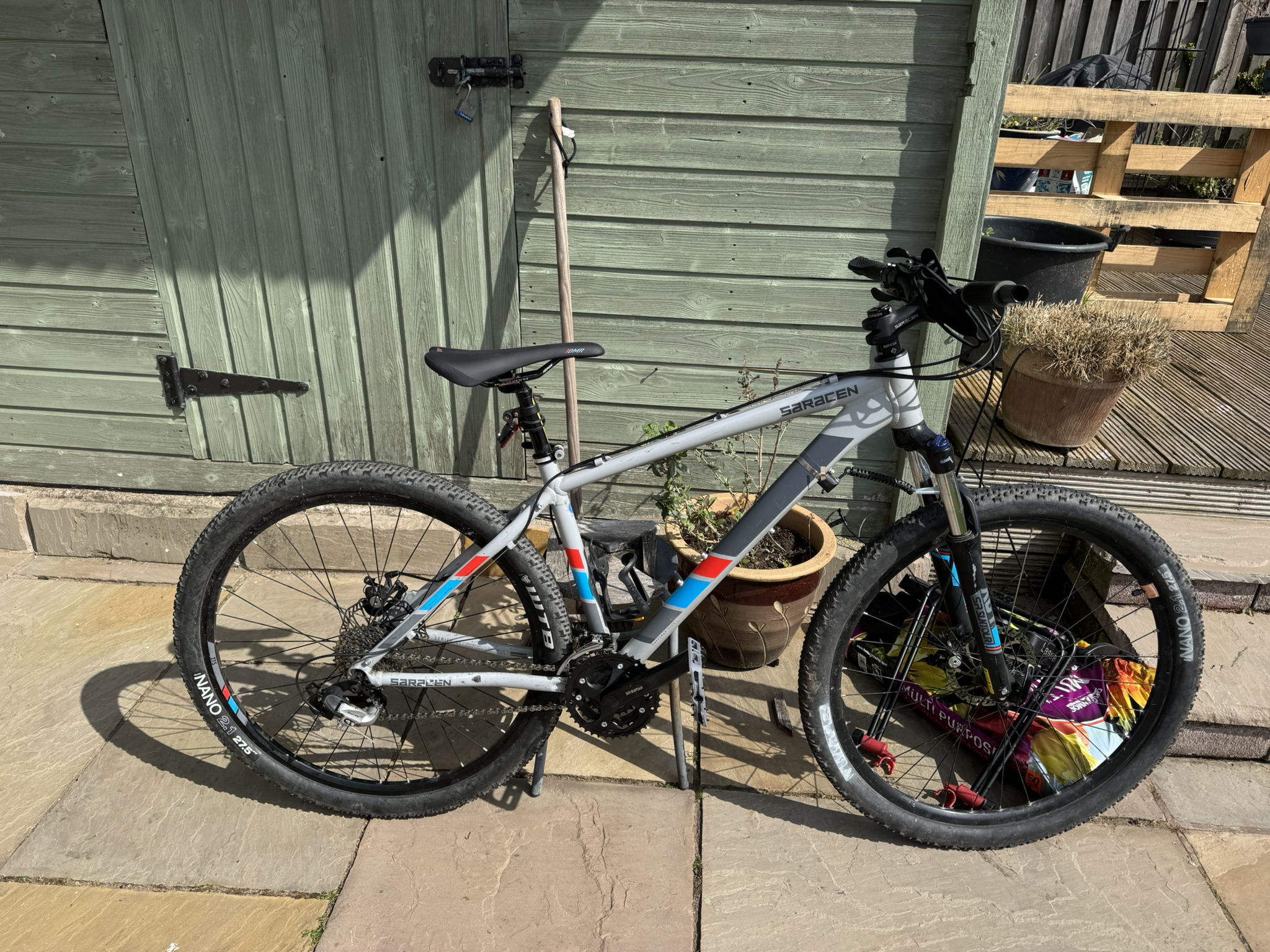
The final choice was a Saracen Tufftrax. Flat handlebars, a small enough frame that was easier to get on and off, and nice wide tyres that gave at least the illusion of feeling safer. Nothing fancy, but it felt right.
Moving everything to the left
On both the Performer and Ice trikes I’d already modified the controls so everything was on the left side, so I had a good idea what I needed to do.
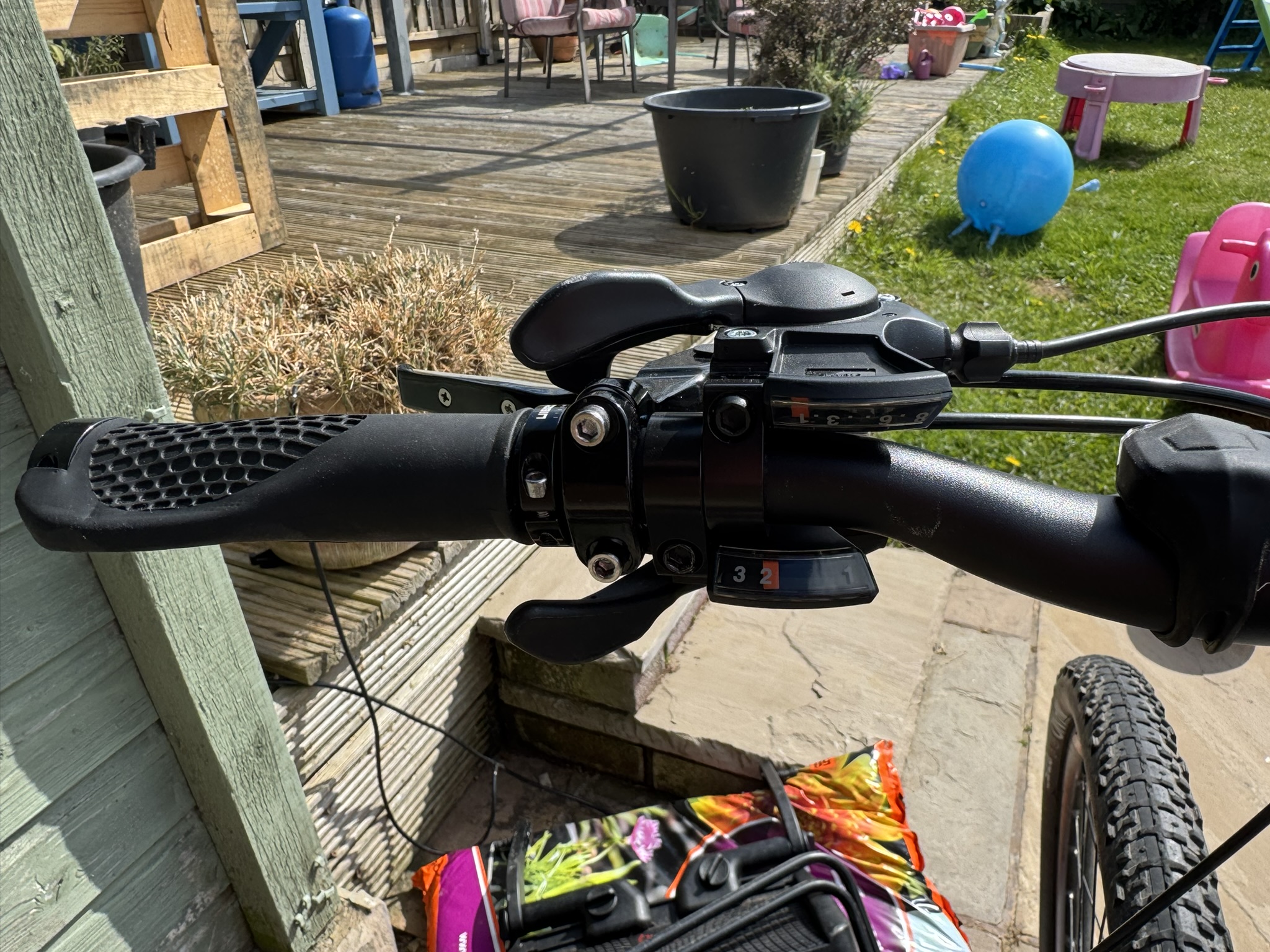
The bike came with integrated brake levers and shifters - one unit on each side. That wasn’t going to work. I bought a dual brake lever that pulls both front and rear brakes from one lever, then needed to figure out the shifters.
Electronic shifting would have been ideal - one button, no cables to route - but it’s expensive and I didn’t even know if I could ride yet. After some research and looking at images online, I settled on Shimano Altus SL-M315 trigger shifters. On the trikes I’d used twist shifters for the front derailleur and a bar-end shifter for the rear. That worked fine when I was sat on three wheels - if something went wrong I wasn’t going to fall. On two wheels I didn’t want to be messing around trying to twist a shifter and pull the brake at the same time.
The solution was two of the same shifter: the left one mounted normally, the right one mounted next to it but upside down. Both reachable with my left hand without moving my grip.
The foot problem
My right foot has always twisted on pedals. It either comes off or catches in the chain.
Years ago when I first tried cycling after the stroke, we experimented with various solutions. My wife - girlfriend at the time - even came up with the idea of using velcro straps to tie my foot to the pedal. That worked well until I tried stopping and ended up in a heap on the floor.
I never liked the idea of clipless pedals and wasn’t sure my foot would stay clipped in with the twisting. Toe clips wouldn’t work either. At one point I went to a weekly workshop at the hospital where someone suggested making something out of the mouldable thermoplastic they use for splints. We made a sort of cage from some offcuts - long enough to go around my shoe on the pedal with a lip on the back and sides to stop the foot twisting. It worked, sort of. But I ended up on trikes anyway, where I eventually got some heel support pedals from TerraTrike - platforms with a raised back edge that kept my foot in place.
Twenty years later, coming back to two wheels, that thermoplastic cage was long gone. I bought some to try and recreate it, but in the end the solution turned out to be simpler than all of that.
I already had Five Ten bike shoes, which are known for their sticky rubber soles. All I needed was decent flat pedals with long pins. The pins grip the sole and the foot barely moves once it’s placed. Getting my foot straight on the pedal is still a bit awkward, but once it’s set it stays put. I went with HT pedals after reading far too many reviews.
Steering damper
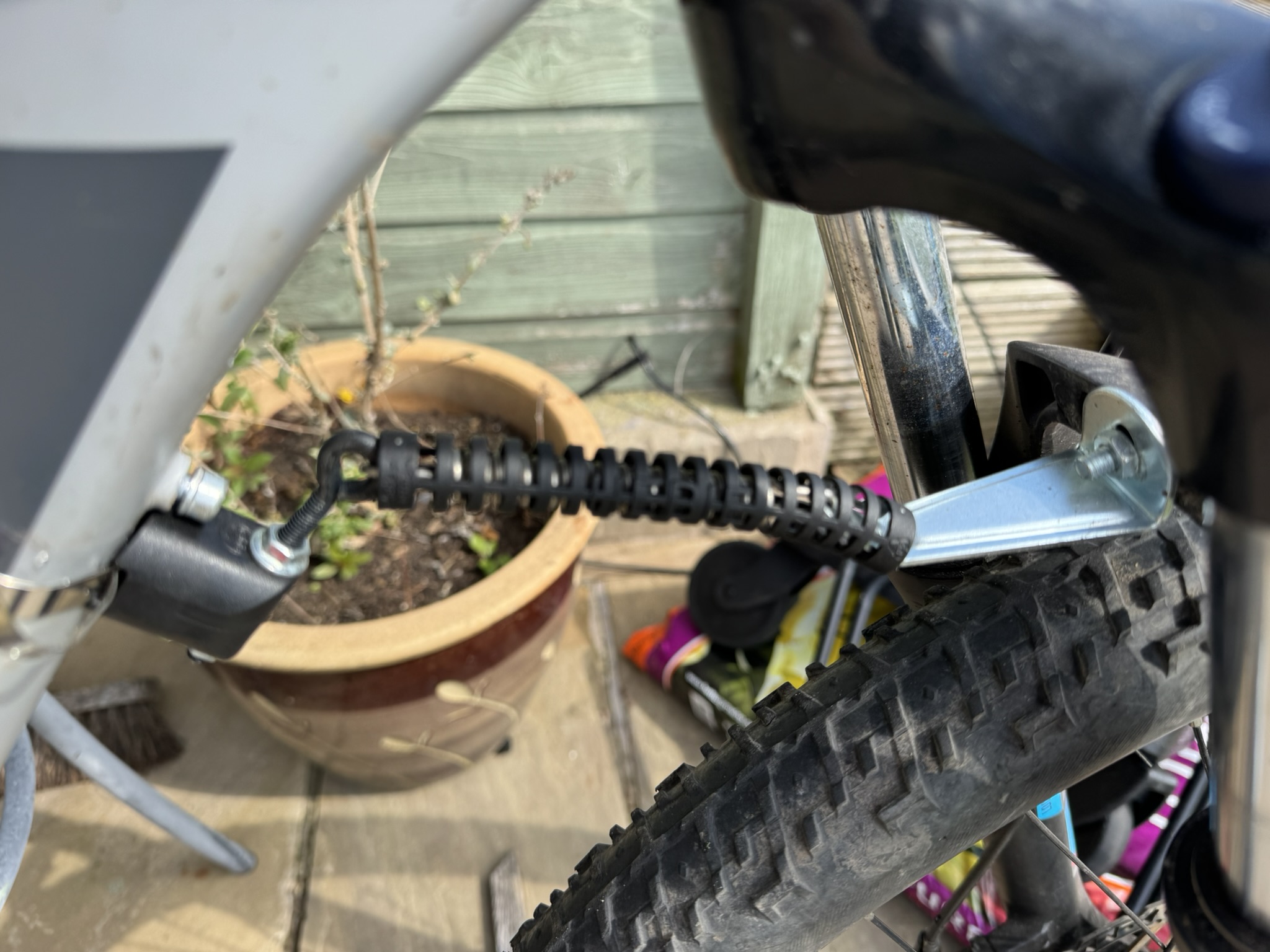
One last thing I added after reading up on one-armed cyclists was a steering damper. I’d seen them mentioned several times - anything from a full-on headset replacement to a more basic spring system. After the first couple of rides when the handlebars felt very twitchy, I fitted a Hebie steering damper. I’ve no idea if it actually changed anything, but I don’t fancy taking it off to find out.
Where things stand
The bike works. I can ride it, start it, stop it. It’s not perfect - I’m still figuring out saddle height, gearing, and how to get my weaker leg to contribute more. But it goes on the bike rack, and I can go out with the family again.
After twenty years on three wheels, that feels like progress.
Some links in this post may be affiliate links, which means I may earn a small commission at no extra cost to you.